


Why Pets Cough, Sneeze, and Wheeze: Understanding Common Causes & When to Seek Help
Your pet’s breathing can tell you a lot about their health. While an occasional sneeze or snore might seem harmless, persistent coughing, wheezing, or labored breathing could signal something more serious.
At Southern Arizona Veterinary Specialty & Emergency Center, we often see concerned pet parents unsure whether a new noise is normal or a red flag. This guide is designed to help you recognize common respiratory symptoms, understand what might be causing them, and know when it’s time to seek veterinary care.
If you’re ever uncertain, it’s always safer to contact our team directly. We’re here 24/7 for emergency support.
Coughing in Pets: What’s Causing That Barking Sound?
A persistent cough isn’t just annoying—it could be a sign of an underlying medical condition that needs prompt attention.
Common Causes of Coughing in Pets:
- Kennel Cough (Canine Infectious Respiratory Disease Complex):
Highly contagious and often contracted at dog parks or boarding facilities. Sounds like a dry, hacking cough.
Read more – AKC
Read more – AVMA
- Heart Disease or Congestive Heart Failure:
Coughing (especially at night or after exercise) can indicate fluid accumulation in the lungs.
Heart Disease Diagnosis – Cummings
- Collapsed Trachea:
Often affects toy breeds. The cough sounds like a goose honk and worsens with excitement or pulling on a leash.
Learn more – AKC
- Pneumonia or Lung Infections:
Wet or productive coughs may indicate bacterial, fungal, or viral infections. - Heartworm Disease:
Common in Arizona and spread by mosquitoes, heartworm can cause persistent coughing and breathing difficulty.
Heartworm Prevalence Map – CAPC
When to Call the Vet for a Cough:
- Cough persists more than a few days
- Signs of lethargy, poor appetite, or difficulty breathing
- Blue or pale gums, indicating low oxygen levels
Sneezing in Pets: Allergies, Infections, or Something Else?
A single sneeze is nothing to worry about—but if it becomes chronic or messy, it may signal a bigger issue.
Common Causes of Sneezing:
- Allergies:
Pets can be allergic to dust, pollen, smoke, or cleaning products.
Allergy Tips for Small Animals – Purdue
- Upper Respiratory Infections:
Especially common in cats from shelters or multi-cat homes.
Feline URI Guide – ASPCA Pro
- Dental Disease:
Infections in the upper jaw can affect the sinuses, causing sneezing and discharge. - Nasal Tumors or Foreign Objects:
Persistent sneezing, especially on one side, may be caused by growths or objects lodged in the nasal passage.
When to Seek Care for Sneezing:
- Thick, yellow, green, or bloody nasal discharge
- Facial swelling, nosebleeds, or eye discharge
- Loss of appetite or behavior changes
Wheezing and Labored Breathing: A Clear Red Flag
Wheezing or any sign that your pet is struggling to breathe should never be ignored. These noises often indicate narrowing or inflammation of the airways.
Potential Causes of Wheezing:
- Feline Asthma:
Inflammatory lung condition in cats that can mimic coughing or wheezing.
Feline Asthma – Cornell Feline Health Center
- Bronchitis or Pneumonia:
Infections that restrict airflow and cause respiratory distress. - Heartworm Disease:
Can cause lung damage, coughing, and wheezing in both dogs and cats. - Allergic Reactions or Irritants:
Smoke, perfumes, or mold can trigger wheezing episodes.
Call a Vet Immediately If You Notice:
- Open-mouth breathing, especially in cats
- Blue, pale, or gray gums
- Sudden collapse, weakness, or intense effort to breathe
Respiratory Distress in Pets – AAHA
Reverse Sneezing: Scary But Usually Harmless
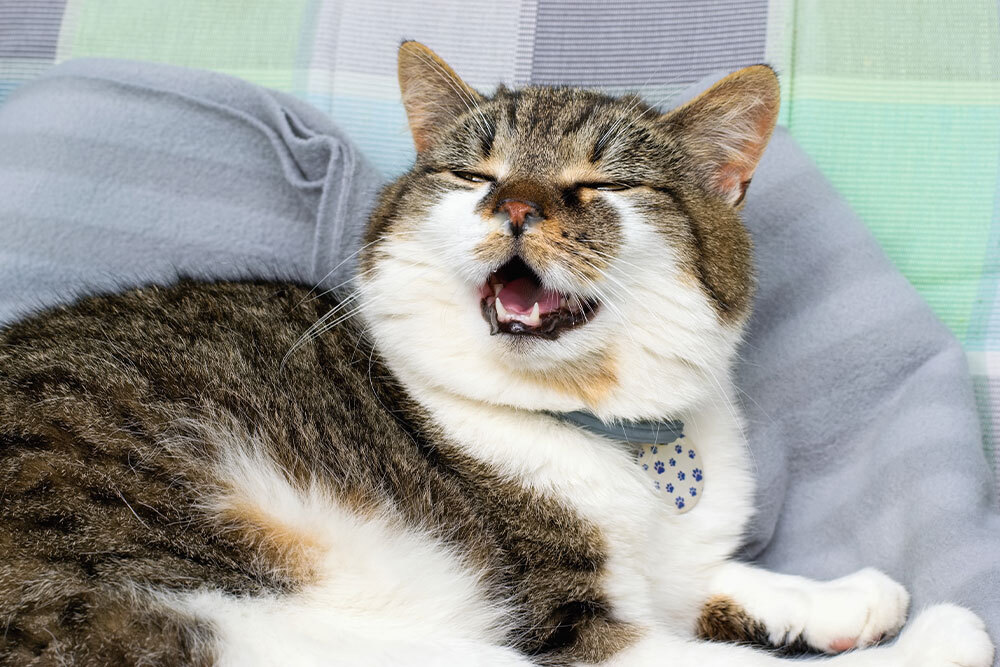
Reverse sneezing can be alarming but is often benign. It sounds like rapid snorting or gagging and usually passes within a minute.
Triggers for Reverse Sneezing:
- Excitement, leash pulling, or exertion
- Irritants like dust, pollen, or air fresheners
- Mild inflammation in the throat or nasal passages
Call Your Vet If:
- Episodes are frequent, long, or seem distressing
- Sneezing is accompanied by nasal discharge or coughing
- Your pet seems panicked or unable to recover quickly
Snoring: Cute or Concerning?
Snoring is common in many pets, especially brachycephalic (flat-faced) breeds—but it can also indicate airway obstruction.
Snoring Triggers:
- Brachycephalic Airway Syndrome (BOAS):
Seen in Bulldogs, Pugs, Boston Terriers, and Persian cats.
BOAS Info – Cornell
- Obesity:
Excess tissue around the throat can block airflow during sleep. - Nasal or Throat Issues:
Polyps, tumors, or infections may also contribute.
Call the Vet If:
- Snoring becomes louder or occurs while awake
- Your pet snores along with gasping, choking, or disrupted sleep
- You notice fatigue, low energy, or exercise intolerance
Emergency Warning Signs: When to Act Fast
Call your vet or visit an emergency clinic immediately if your pet experiences:
- Persistent or worsening coughing, wheezing, or sneezing
- Blue, pale, or gray gums
- Open-mouth breathing, gasping, or collapse
- Choking, excessive drooling, or foaming at the mouth
Your pet’s life may depend on swift veterinary intervention. Contact Southern Arizona Veterinary Specialty & Emergency Center if you’re unsure.

Preventing Respiratory Illness in Pets
Stay on Top of Preventive Care
- Annual wellness exams for early detection of chronic issues
- Heartworm prevention year-round in warm climates like Arizona
Canine Preventive Guidelines – AVMA/AAHA
Reduce Environmental Triggers
- Avoid smoking around pets
- Use air purifiers and avoid heavily scented cleaning products
- Keep your home free of dust, mold, and pollen buildup
Pet Allergy Management – Purdue
Breathe Easy: We’re Here to Help
Not every sneeze or snore is cause for alarm—but persistent or unusual respiratory symptoms could signal something serious.
If you’re ever unsure, don’t wait. Our emergency and specialty team at Southern Arizona Veterinary Specialty & Emergency Center is ready to help you get answers and peace of mind.
Request an Appointment or call us anytime for urgent respiratory concerns.





Leave A Comment